Bone-on-bone at 31: a Cambridge scientist’s story of staying active with focused shockwave
Dr David Willer is a research scientist, a lifelong endurance athlete and a patient. Here he tells us, in his own words, how regular focused shockwave therapy has become part of managing severe osteoarthritis in his foot.
Research Fellow, College Teaching Officer in Natural Sciences & Praelector
Murray Edwards College, University of Cambridge
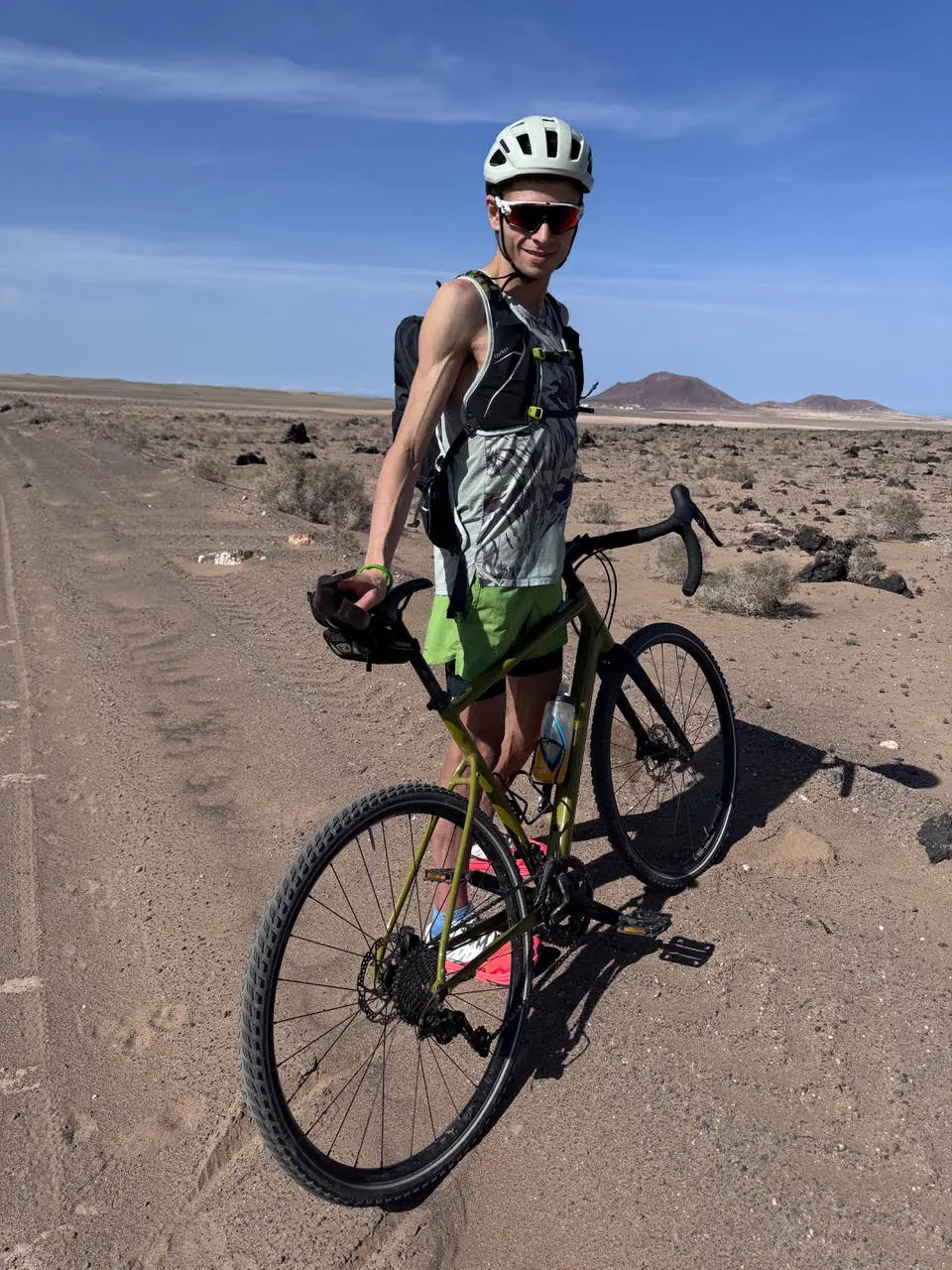
David on an off-road bike tour this spring.
At Venn Healthcare we usually hear about focused shockwave therapy from the clinicians who use it. This story comes from the other side of the treatment couch, and from a patient who is unusually well placed to judge what a treatment is really doing.
David is treated by Joe Applegate at The Shockwave Specialists, one of our customers and a clinician who uses focused shockwave in practice. Read his account below in his own words, then see how it answers questions clinicians often ask us about focused shockwave therapy and osteoarthritis.
“At 31, being told that you have essentially bone-on-bone arthritis in your foot is not an ideal place to be.”
— Dr David Willer
David’s story
Highlighted phrases 1 are picked out below the story, where we answer questions clinicians often ask.
At 31, being told that you have essentially bone-on-bone arthritis in your foot is not an ideal place to be. I have always been extremely active, with a strong background in high-level endurance sport, so losing the ability to run and finding everyday walking increasingly difficult was a major change.
Alongside sport, I work as an academic and research scientist at the University of Cambridge. That probably means I am more interested than most patients in what a treatment is actually doing1, what the evidence supports, and, most importantly, whether it produces a meaningful functional benefit.
Where I started
My problems began with a navicular stress fracture in 2017. Over the following years, I developed severe osteoarthritis in the talonavicular joint, a small but important joint in the middle of the foot.
By 2024, the joint was essentially bone-on-bone. Walking became increasingly difficult, running was no longer possible, and pain, swelling and crepitus were regular features of everyday life. All I was offered by the NHS at this point was a joint fusion and potentially later amputation, which is not a route I want to take at this age in life2.
I have tried a range of ways of managing it, including specialist footwear and orthotics, bracing and injections. Since May 2025, one of the most useful additions has been focused shockwave therapy.
My experience with focused shockwave
I have had regular treatment with Joe Applegate at the Shockwave Specialists using STORZ Medical focused shockwave equipment.
For me, the benefit has been very real. I would not claim that shockwave has somehow reversed an end-stage arthritic joint, but it has helped considerably with symptom and pain management3 and has become one of the treatments I actively choose to continue.
Where I am now
My foot is certainly not normal, and walking and running remain limited. But despite the severity of the arthritis, I am still swimming, cycling, using an elliptical and also training regularly at a CrossFit gym.4
For someone whose life has always involved a lot of sport and physical activity, maintaining that level of independence and exercise matters enormously. Focused shockwave is one part of a wider management strategy, rather than a cure, but it has helped me remain active and manage the condition without simply accepting that major surgery has to be the immediate next step.
Hopefully, it may allow me to buy enough time for newer therapies to reach a point at which the joint and the cartilage can be restored.
Research Fellow, College Teaching Officer in Natural Sciences & Praelector
Murray Edwards College, University of Cambridge
Four clinician questions David’s story helps answer
These are questions clinicians often ask us about focused shockwave therapy and osteoarthritis. David’s own words, highlighted in his story above, are part of each answer.
How can I judge whether focused shockwave therapy is working for my patients?
Function is a useful place to start: what a patient can now do, not only how they feel. Dr David Willer, a Cambridge research scientist, assesses his own treatment by asking what it is doing, what the evidence supports and whether it produces a meaningful functional benefit. As a clinician, you can decide how to measure progress.
In David’s words“more interested than most patients in what a treatment is actually doing”
What non-surgical options can I offer patients with severe foot arthritis?
Patients with severe osteoarthritis in the foot often work through several non-surgical options: specialist footwear and orthotics, bracing, injections and focused shockwave therapy, a non-invasive option that can sit alongside the rest. Dr David Willer tried all of these for bone-on-bone talonavicular osteoarthritis, rather than accept joint fusion as the immediate next step.
In David’s words“which is not a route I want to take at this age in life”
Will focused shockwave therapy help my patients with osteoarthritis?
Focused shockwave therapy is being researched for osteoarthritis and is not a cure, but it can be a useful part of a management plan. Dr David Willer, who has severe osteoarthritis in his foot, reports that it has helped considerably with symptom and pain management, and he does not claim it reverses joint damage.
The research so far: a 2023 systematic review of 12 randomised trials in knee osteoarthritis (Silva et al., Clinical Rehabilitation) reported improvements in pain compared with sham treatment. David’s foot is a different joint, and his treatment is a tailored focused shockwave protocol targeted around the affected joint, so as a clinician you will want to judge suitability patient by patient.
In David’s words“it has helped considerably with symptom and pain management”
Can patients with severe foot osteoarthritis stay active?
Some can, within limits. Dr David Willer has bone-on-bone osteoarthritis in his talonavicular joint, and walking and running remain limited for him. He still swims, cycles, uses an elliptical and trains regularly at a CrossFit gym, alongside regular focused shockwave therapy. As a clinician, you can decide what level of activity suits each patient.
In David’s words“I am still swimming, cycling, using an elliptical and also training regularly at a CrossFit gym”
We work every day with clinicians who use shockwave technology, and we run practitioner-led training so that more of them can offer it well. It’s rare, and valuable, to hear what that looks like from the patient’s chair.
We’re grateful to David for sharing his story so openly.
David’s story describes one patient’s experience of managing severe osteoarthritis. It shouldn’t be read as evidence that focused shockwave therapy will produce the same results for every patient, and it isn’t presented here as a way to reverse joint damage or restore cartilage. Research into shockwave therapy for osteoarthritis is still developing. Suitability depends on the condition, medical history and clinical findings, so treatment should be based on an appropriate clinical assessment and an informed discussion of the options with the patient.
Interested in shockwave therapy for your practice?
Talk to the Venn Healthcare team about focused shockwave technology and the practitioner-led training that goes with it.
Would you like to see Focused Shockwave Therapy in action and gain some experience using the equipment at one of Venn’s CPD courses >>