Are your patients stuck in Fight or Flight?
Poor sleep, brain fog, burnout, chronic pain, urinary issues… many share a common root: ANS dysregulation.
In today’s high-stress world, many patients are stuck in sympathetic ‘fight or flight’ overdrive. Without rebalancing the Autonomic Nervous System (ANS), conventional treatments often fall short as the body stays in a state that resists healing.
We speak to functional medicine practitioner LAURA DINHAM about how she’s using NESA neuromodulation to restore balance & improve outcomes.

Clinical Perspective
Can you tell us a bit about your clinical background and your patient population?
I am a nutritional therapist, naturopath and functional medicine practitioner. I have been practising for 10 years and set up The Ozone Clinic 3 years ago. I see a range of people, from those who want to stay healthy, women’s health, and people with complex chronic conditions, such as chronic fatigue and long COVID.
What first drew your attention to the Autonomic Nervous System (ANS) as a root cause in your patients’ presentations?
The more clients I saw, the more I became aware that the nervous system was upregulated in the majority of clients. Many are in a chronic sympathetic state of fight, flight or freeze.
I realised that diet and lifestyle alone would not resolve their conditions. I decided to look into how the nervous system affects the body as a whole and discovered the work of Dr Peter Levine, Richard Schwartz and Bessel Van der Kolk, which led me to deeper research into the nervous system and its impact on chronic health conditions.
Discovering NESA
How did you come across the NESA XSIGNAL device, and what was your first impression?
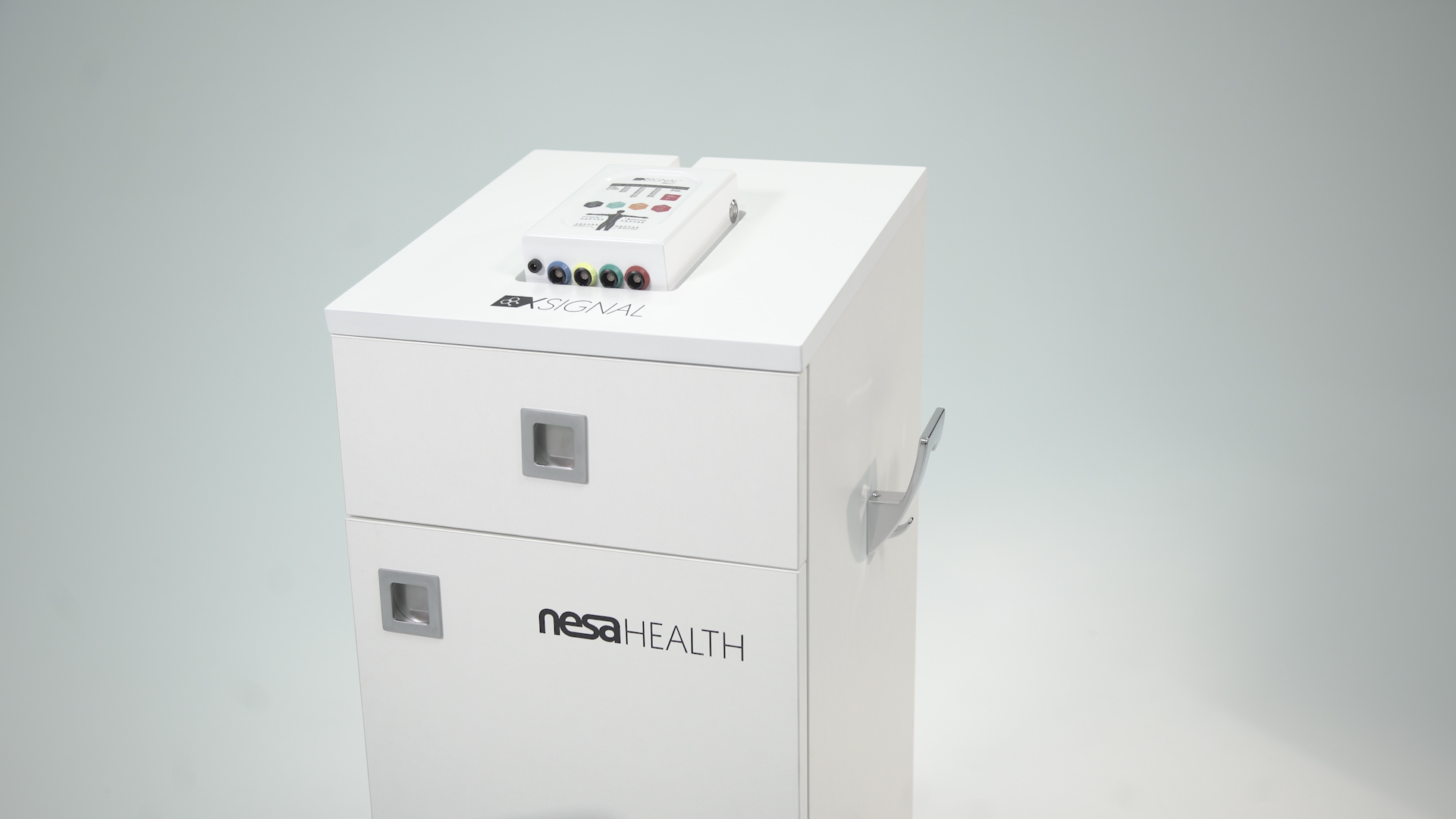
I discovered the NESA X-Signal about a year ago and saw its potential to positively influence the nervous system. I watched the annual NESA conference and learned about its different applications. I was impressed by the scope of support it offers across many conditions.

Using NESA in Practice
Were you sceptical at first? What helped confirm its value in practice?
Yes, I was sceptical at first. You don’t feel anything during the treatment, but about halfway through your first session, you start to yawn and your stomach gurgles — a strong sign of parasympathetic activation (rest and digest mode).
When clients came back saying they were sleeping better and waking less at night, I knew it was a great addition to the clinic. As a clinician, sleep is foundational; without good sleep, other interventions rarely deliver results.
What kinds of patients benefit most from NESA therapy?
I work with a diverse group, but menopausal women and those with sleep issues benefit most. I’ve also seen positive results in clients with Parkinson’s and autoimmune conditions. Given today’s stressful environments, I believe everyone can benefit from NESA.
Can you share a standout patient case?
A client with long COVID, ectopic heartbeats and fatigue and debilitating headaches saw remarkable improvements after 10 sessions. The ectopic heartbeats reduced, headaches eased significantly, and her energy levels rose.
How quickly do results appear, and do they last?
Most people notice improvements after about five sessions. Generally, ten to twenty sessions are needed depending on the condition, followed by maintenance every four to six weeks.
Any patterns in those who respond especially well?
Clients with sleep issues especially those who struggle to fall asleep or wake frequently respond exceptionally well in my experience.
Integrating NESA into Treatment Protocols
How does NESA integrate with your wider therapeutic approach?
I use multiple therapies in my clinic. NESA has been the missing piece. To my knowledge, it’s the only medical-grade system designed specifically for the autonomic nervous system.
What would you say to other clinicians thinking about adding NESA?
In today’s environment, we must address the nervous system to get the best results. I’d recommend NESA as an essential part of any modern clinical toolkit.
Laura Dinham, April 2025
The Ozone Clinic, UK