EMTT’s Mechanism of Action in Bone Healing
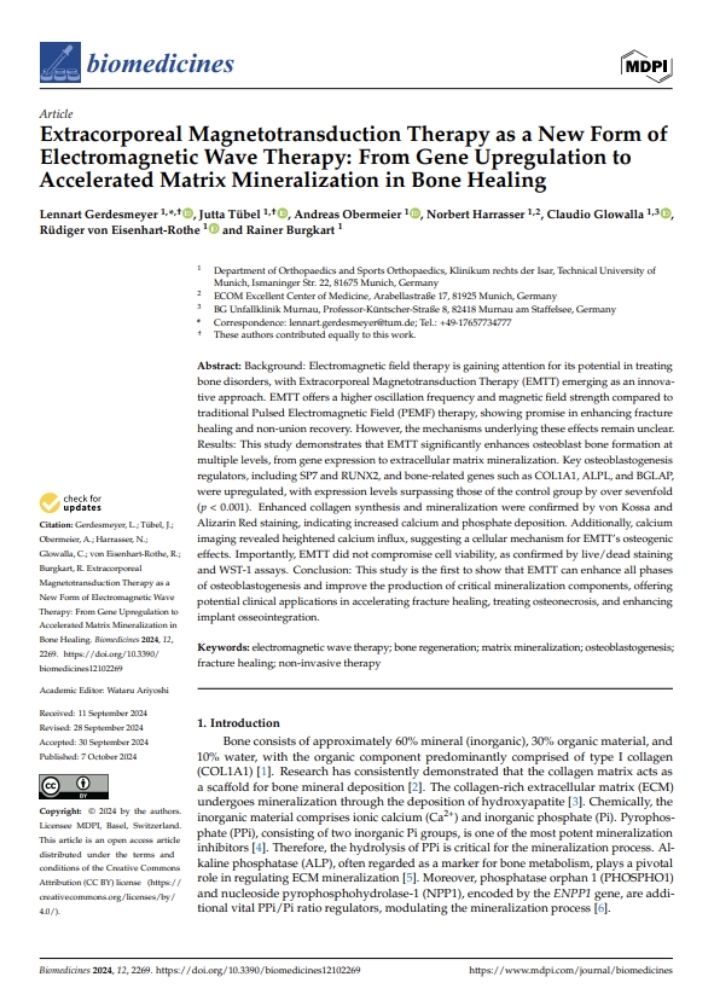
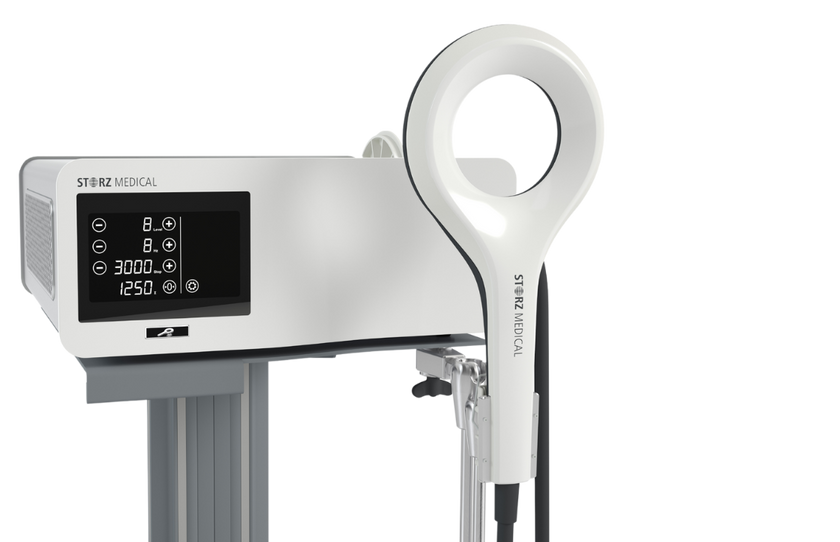
EMTT operates on the principles of electromagnetic wave therapy, using high oscillation frequencies and magnetic field strengths far exceeding traditional Pulsed Electromagnetic Field (PEMF) therapy. Whereas PEMF typically works with magnetic fields ranging between 1 and 10 mT, EMTT devices can generate fields of up to 150 mT. This significant increase in intensity translates into a more profound biological impact, which is critical for promoting bone healing at the cellular level.
The primary bone-forming cells, osteoblasts, are central to the healing process. EMTT has been shown to stimulate these cells in multiple ways:
- Gene Upregulation: EMTT triggers the upregulation of essential bone-related genes, such as RUNX2 and SP7, which play pivotal roles in osteoblast differentiation and bone formation. These genes exhibited significant increases in expression after EMTT treatment, with SP7 expression rising more than sevenfold compared to the control group.
- Collagen Synthesis: Collagen, the main organic component of bone, acts as a scaffold for bone mineral deposition. EMTT enhances collagen production, as evidenced by Sirius Red staining in the study. The increase in collagen deposition suggests that EMTT not only supports osteoblast differentiation but also boosts the overall structural integrity of the healing bone.
- Matrix Mineralization: Perhaps the most critical aspect of bone healing is the mineralization of the extracellular matrix. The study demonstrated that EMTT promotes calcium and phosphate deposition, as confirmed by von Kossa and Alizarin Red staining. These minerals are vital for forming hydroxyapatite, the inorganic compound that provides bone with its hardness and strength.
Key Findings and Clinical Implications
The study’s results have profound implications for clinical practice, especially for healthcare professionals treating bone fractures, osteonecrosis, and implant osseointegration. Here are the key findings and what they mean for you as a doctor, physiotherapist, or sports therapist:
- Enhanced Osteogenesis: EMTT significantly accelerates the osteogenesis process, meaning that bone healing can occur faster than with traditional methods. This is particularly relevant for patients recovering from fractures or those experiencing delayed union or non-union of bones.
- Safe for Cell Viability: A major concern with any form of electromagnetic therapy is its potential impact on cell viability. However, the study showed that EMTT does not compromise cell viability or proliferation. This makes it a safe option for long-term treatment without risking cellular damage or decreased bone quality.
- Calcium Influx and Bone Metabolism: One of the most interesting aspects of EMTT’s action is its ability to increase intracellular calcium influx. Calcium plays a crucial role as a secondary messenger in various cellular processes, including osteoblast differentiation and bone formation. The observed rise in calcium levels post-EMTT treatment points to a likely mechanism for the accelerated healing seen in clinical practice.
- Potential Applications in Implant Osseointegration: EMTT’s ability to enhance both organic and mineral components of bone suggests its potential use in improving the integration of implants with surrounding bone. For professionals involved in orthopaedic surgery or dental implants, this could be a game-changer. Accelerating osseointegration not only improves implant stability but also reduces recovery time for patients.
- Non-invasive Treatment for Chronic Conditions: Beyond fractures and surgical applications, EMTT shows promise in treating chronic musculoskeletal conditions, such as lower back pain and tendinopathies. The high-frequency magnetic fields can stimulate tissue repair and reduce inflammation, offering a non-invasive alternative to patients who may not respond well to other therapies.
Integrating EMTT into Clinical Practice
The growing body of evidence supporting EMTT’s effectiveness suggests that it could become a valuable tool in the therapeutic arsenal for bone and tissue healing. However, integrating new technology into clinical practice requires careful consideration of the treatment protocols, patient selection, and the specific conditions being treated.
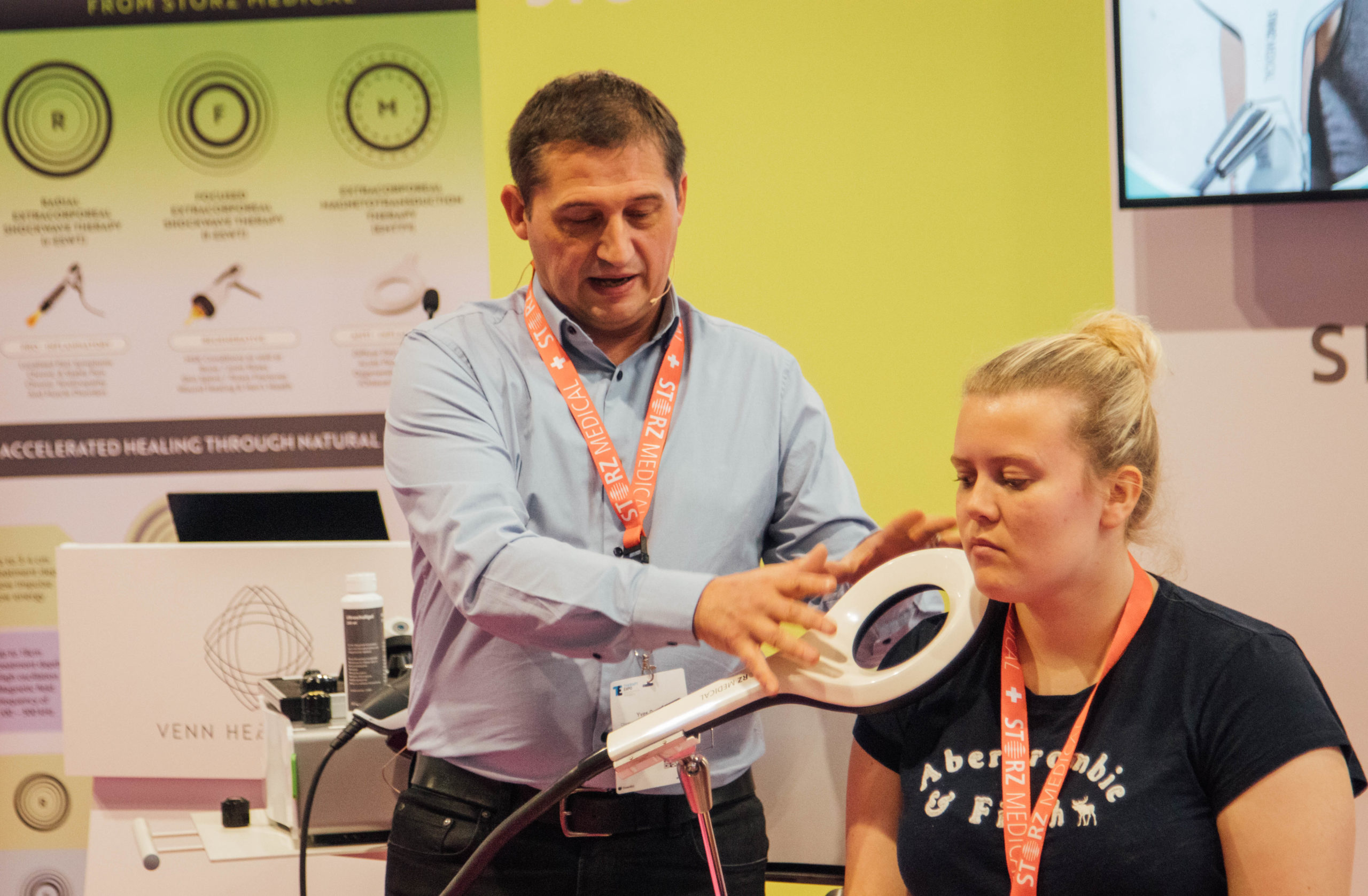
Treatment Protocols: According to the study, the optimal EMTT treatment involved stimulation sessions lasting 30 minutes, two to three times per week. For clinicians, this means that EMTT can be incorporated into regular patient visits without significant time burdens, making it a convenient option for both practitioners and patients.
Patient Selection: EMTT may be particularly beneficial for patients with complex bone healing challenges, such as those with non-union fractures or those recovering from osteonecrosis. It also holds potential for athletes or individuals undergoing rehabilitation, as it can shorten recovery time and improve functional outcomes.
Combining EMTT with Other Therapies: Given EMTT’s non-invasive nature, it can be easily combined with other therapeutic modalities, such as physical therapy, manual manipulation, or even pharmaceutical interventions. This multimodal approach can enhance overall treatment efficacy, addressing both the mechanical and biological aspects of bone healing.
A New Horizon for Bone Healing
As healthcare professionals dedicated to improving patient outcomes, it’s essential to stay at the forefront of medical advancements. EMTT represents a promising step forward in bone healing, offering faster recovery times and enhanced cellular activity without compromising patient safety. Whether you’re treating fractures, managing chronic pain, or assisting in post-surgical recovery, EMTT could provide an effective, non-invasive option to improve patient care.
By understanding the science behind EMTT and applying it thoughtfully in clinical settings, you can help your patients recover more efficiently and get back to their normal activities sooner. As more research emerges, we can expect EMTT to play an increasingly vital role in musculoskeletal health, offering new hope for patients and practitioners alike.